Tarmac Driveway Installation Across Kent

Tarmac driveway installation across Kent: full excavation, compacted sub-base, and a properly laid wearing course, built to last.

Your existing driveway is cracking, sinking, or breaking up at the edges, or you want a clean, hard-wearing surface where there is currently concrete, gravel, or nothing at all. We install tarmac driveways across Kent, with our own team handling every stage from excavation to the final wearing course. No subcontractors, no phone estimates without seeing the job.
What Tarmac Is, And Why It Works So Well For Most Driveways

Tarmac, properly called hot-rolled asphalt, is a dense, compacted surface that we lay in layers over a prepared sub-base. It is not the same as the recycled planings some contractors use to cut costs. When we install a tarmac driveway properly, we use fresh material with a genuine Type 1 MOT stone sub-base underneath.

That sub-base is usually around 150mm of compacted hardcore. It is the part we do not see once the driveway is finished, but it is also the part that decides whether the surface lasts 15 years or starts failing after 5. Without it, tarmac can flex under load, crack at the edges, and sink near drainage channels. With a solid sub-base, the surface bonds properly, drains well, and holds its shape through repeated freeze-thaw cycles.

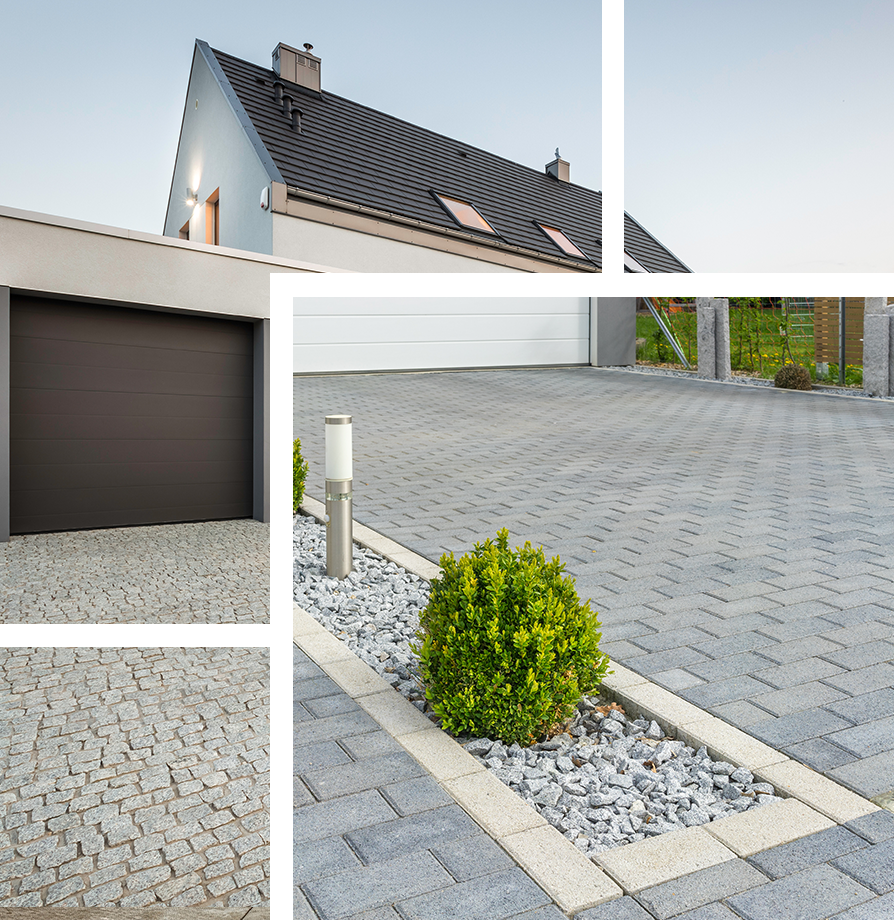
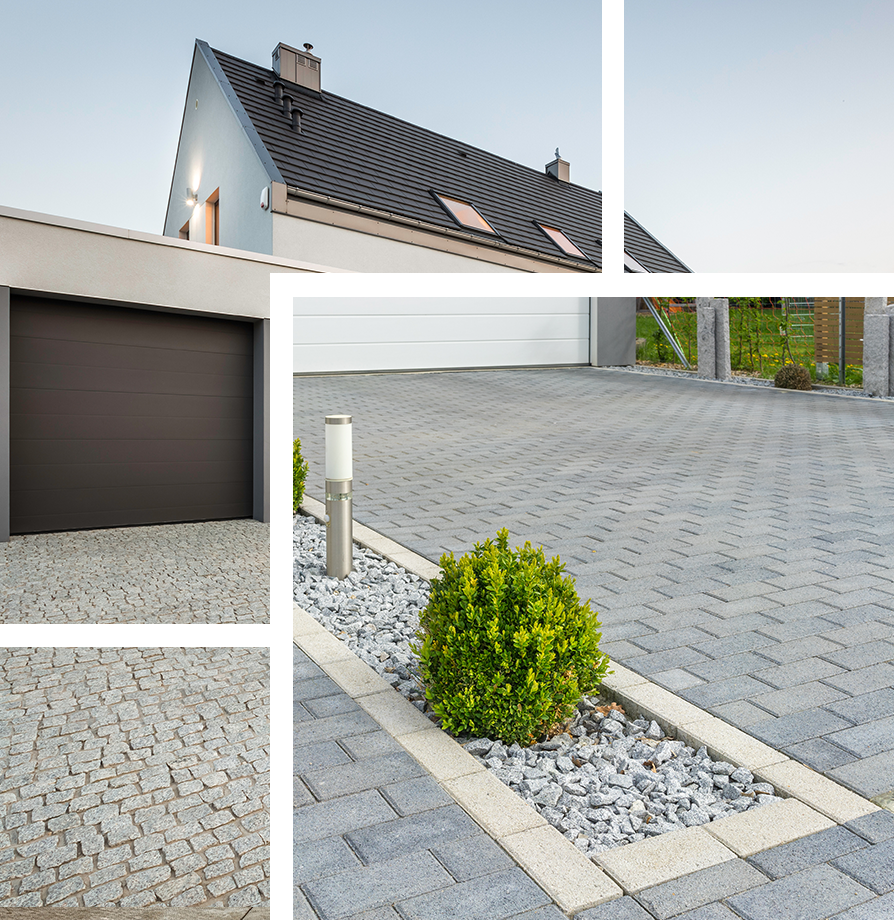
We install the surface itself in two layers: the binding course, which is the coarser base layer, followed by the wearing course, which is the fine-grade top layer that creates the smooth black finish. Both layers are rolled and compacted before the job is complete. We can also add optional block edging or decorative kerb stones to frame the perimeter and help stop the tarmac spreading at the edges over time.

How We Tell Whether A Driveway Needs Replacing Or Repairing

Not every driveway problem needs a full replacement. Some surface damage can be repaired. But there are certain warning signs we look for because they often suggest the sub-base has failed. When that happens, a repair usually only delays the same problem.

  • Cracking that runs in a network of smaller lines, often called alligator cracking, usually means the sub-base below is moving.
  • Sunken areas or ruts that hold water after rain suggest drainage below the surface has broken down.
  • Edge cracking or crumbling where the tarmac meets the boundary often means the perimeter has no proper containment.
  • Potholing shows that the surface material has become loose and is breaking away under vehicle weight.
  • An older surface that has turned grey, flaky, and oxidised usually means the binder has degraded and the surface has become brittle.

If we find one or two isolated patches, a targeted repair may be the right call. But if the damage is spread across the surface, or if the sub-base has clearly shifted, we usually recommend a full removal and re-lay. That gives the driveway a clean start and helps it hold properly for another 15 to 20 years.

Patio Construction Medway

What Tarmac Is, And Why It Works So Well For Most Driveways

Driveway Construction Dover

Tarmac, properly called hot-rolled asphalt, is a dense, compacted surface that we lay in layers over a prepared sub-base. It is not the same as the recycled planings some contractors use to cut costs. When we install a tarmac driveway properly, we use fresh material with a genuine Type 1 MOT stone sub-base underneath.

That sub-base is usually around 150mm of compacted hardcore. It is the part we do not see once the driveway is finished, but it is also the part that decides whether the surface lasts 15 years or starts failing after 5. Without it, tarmac can flex under load, crack at the edges, and sink near drainage channels. With a solid sub-base, the surface bonds properly, drains well, and holds its shape through repeated freeze-thaw cycles.

We install the surface itself in two layers: the binding course, which is the coarser base layer, followed by the wearing course, which is the fine-grade top layer that creates the smooth black finish. Both layers are rolled and compacted before the job is complete. We can also add optional block edging or decorative kerb stones to frame the perimeter and help stop the tarmac spreading at the edges over time.

How We Tell Whether A Driveway Needs Replacing Or Repairing

Not every driveway problem needs a full replacement. Some surface damage can be repaired. But there are certain warning signs we look for because they often suggest the sub-base has failed. When that happens, a repair usually only delays the same problem.

  • Cracking that runs in a network of smaller lines, often called alligator cracking, usually means the sub-base below is moving.
  • Sunken areas or ruts that hold water after rain suggest drainage below the surface has broken down.
  • Edge cracking or crumbling where the tarmac meets the boundary often means the perimeter has no proper containment.
  • Potholing shows that the surface material has become loose and is breaking away under vehicle weight.
  • An older surface that has turned grey, flaky, and oxidised usually means the binder has degraded and the surface has become brittle.

If we find one or two isolated patches, a targeted repair may be the right call. But if the damage is spread across the surface, or if the sub-base has clearly shifted, we usually recommend a full removal and re-lay. That gives the driveway a clean start and helps it hold properly for another 15 to 20 years.

CALL US FREE FOR THE BEST POSSIBLE PRICE

07512 399673

Patio Construction Dover

How Led Construction Installs A Tarmac Driveway

Every job runs through the same five stages, carried out by our own team from start to finish. We do not subcontract any part of the work.

  • Site survey and free estimate: we visit, take measurements, check the existing surface, and give you a written quote. No prices over the phone without seeing the job.
  • Excavation: We clear the area, remove the existing surface material, and excavate to the correct depth for your sub-base.
  • Sub-base installation: compacted MOT Type 1 stone is laid and graded to fall correctly for drainage. This stage is what the whole surface depends on.
  • Binding layer: the base course of tarmac goes down and is rolled.
  • Wearing course: the final layer of hot tarmac is laid and compacted to give you the finished surface. Block edging or kerb stones are installed at this stage if specified.

Domestic driveways typically take two to four days from excavation to completion, depending on the size of the area and the groundwork required. You can drive on the new surface within 24 to 48 hours of the wearing course going down.

We will not quote a price without seeing the site first. The variables (existing surface depth, sub-base condition, drainage requirement, and access) affect the cost too much for a phone estimate to be worth anything to you.

What Does A Tarmac Driveway Cost At Led Construction?

Pricing depends on the size of the area, the condition of whatever is currently there, and whether any drainage or edging work is included. We quote in writing after the site visit, with a clear breakdown of what is included.

As a general guide, costs vary by driveway size, groundwork, access, drainage, and edging, so the most accurate price is given after a site survey. Quotes that come in significantly below this range almost always reflect a thinner sub-base, recycled material, or drainage work left out of the scope.

Request your free no-obligation estimate and we will give you a full written breakdown, not a ballpark figure.

How Led Construction Installs A Tarmac Driveway

Every job runs through the same five stages, carried out by our own team from start to finish. We do not subcontract any part of the work.

  • Site survey and free estimate: we visit, take measurements, check the existing surface, and give you a written quote. No prices over the phone without seeing the job.
  • Excavation: We clear the area, remove the existing surface material, and excavate to the correct depth for your sub-base.
  • Sub-base installation: compacted MOT Type 1 stone is laid and graded to fall correctly for drainage. This stage is what the whole surface depends on.
  • Binding layer: the base course of tarmac goes down and is rolled.
  • Wearing course: the final layer of hot tarmac is laid and compacted to give you the finished surface. Block edging or kerb stones are installed at this stage if specified.

Domestic driveways typically take two to four days from excavation to completion, depending on the size of the area and the groundwork required. You can drive on the new surface within 24 to 48 hours of the wearing course going down.

We will not quote a price without seeing the site first. The variables (existing surface depth, sub-base condition, drainage requirement, and access) affect the cost too much for a phone estimate to be worth anything to you.

What Does A Tarmac Driveway Cost At Led Construction?

Pricing depends on the size of the area, the condition of whatever is currently there, and whether any drainage or edging work is included. We quote in writing after the site visit, with a clear breakdown of what is included.

As a general guide, costs vary by driveway size, groundwork, access, drainage, and edging, so the most accurate price is given after a site survey. Quotes that come in significantly below this range almost always reflect a thinner sub-base, recycled material, or drainage work left out of the scope.

Request your free no-obligation estimate and we will give you a full written breakdown, not a ballpark figure.

Patio Construction Dover

Planning Permission And Drainage For Tarmac Driveways In Kent

Standard solid tarmac over more than 5 square metres at the front of a house does technically require planning permission, unless surface water is managed on your own land. In practice, this means either directing run-off to a lawn or planting area, or installing a drainage channel that empties to a soakaway on your property.

Porous tarmac resolves the issue entirely by letting water drain through the surface itself. For most residential drives in Kent, the drainage question is straightforward to resolve at the design stage. We cover this as part of the survey visit so you understand the likely drainage requirements before any work starts.

For listed buildings or properties in conservation areas, separate consent requirements may apply. If you are in any doubt, your local planning authority, usually your district or borough council in Kent, can advise, and we are happy to walk through the drainage design with you at the estimate stage.

Three Ways To Book Your Free Site Visit

We cover most of Kent. Contact us to confirm availability and arrange a survey visit.

Phone: 01795 250 115 or 07523 090 560. Speak to us directly, and we will arrange a survey visit at a time that suits you.

Email: info@ledconstruction.co.uk. Include your postcode and a brief description of the work, and we will come back to you promptly.

Request a free no-obligation estimate, use the contact form on our website, and we will come back to you to discuss your project and next steps.

Request Your Free Estimate Now

Simply fill out the form below or call us to get started. We’re ready to help turn your ideas into reality with professional, reliable construction services across Dover, Kent, and the surrounding areas.

This field is for validation purposes and should be left unchanged.
Accepted file types: jpg, gif, png, pdf, Max. file size: 20 MB.
Secret Link